


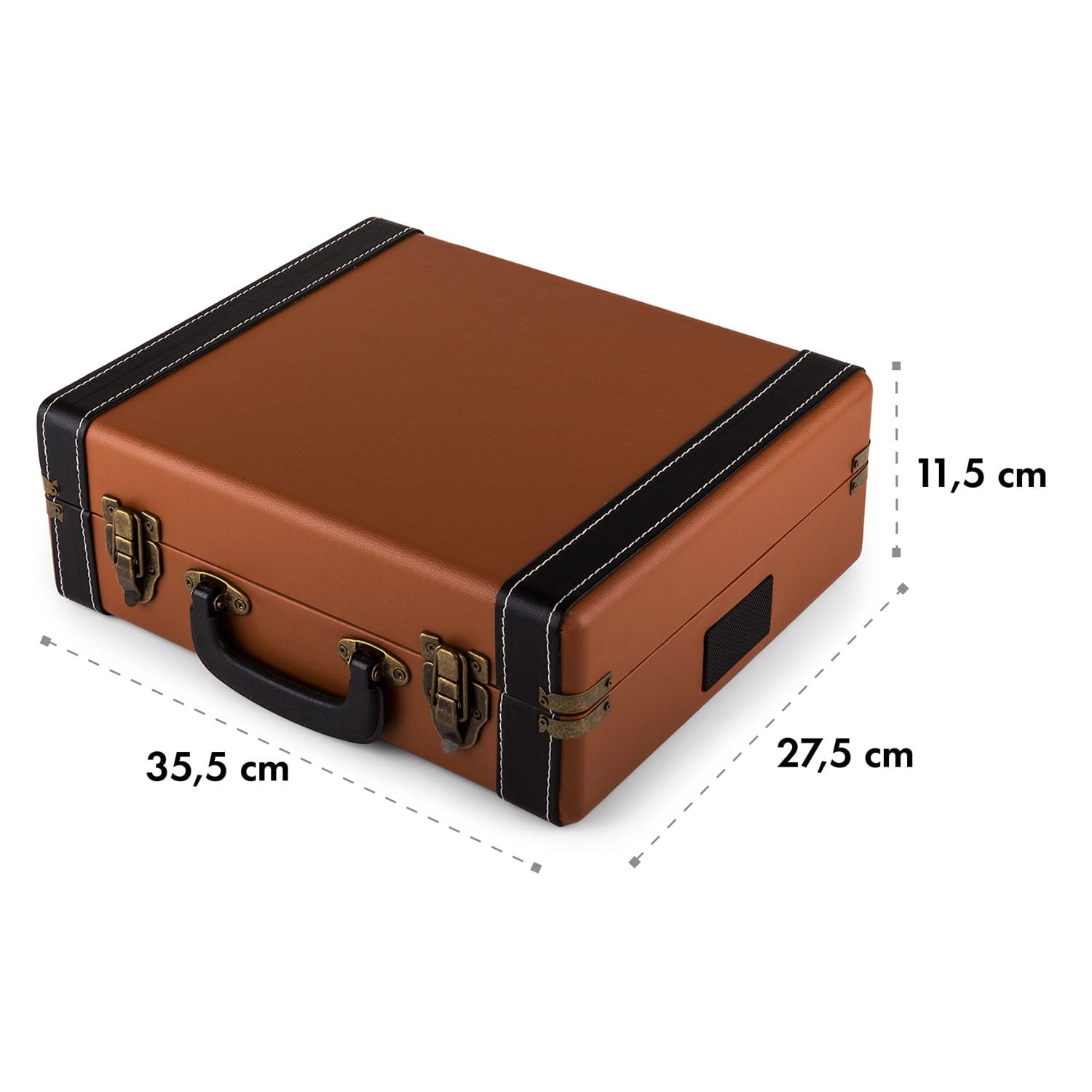
[Used] Jerry Lee Retro Record Player
- Low stock - order quickly! In stock and ready for you! Order now and enjoy your purchase without delays. Low stock - order quickly!
- Shipping time: 3 - 5 days Receive it sooner than you think. Don’t miss this opportunity, order now! Receive it sooner than you think. Don’t miss this opportunity, order now!
- 14 day cooling off period
Condition - acceptable, with signs of wear
Details: Product may have a cosmetic damage (e.g. small scratches) on top, front or sides. The original box may be damaged or repacked. Additionally, some parts may be missing such as the user manual, network cable, remote control, filter. Product comes with a 1-year warranty
Top features
nostalgic record player for playing and digitising vinyl records
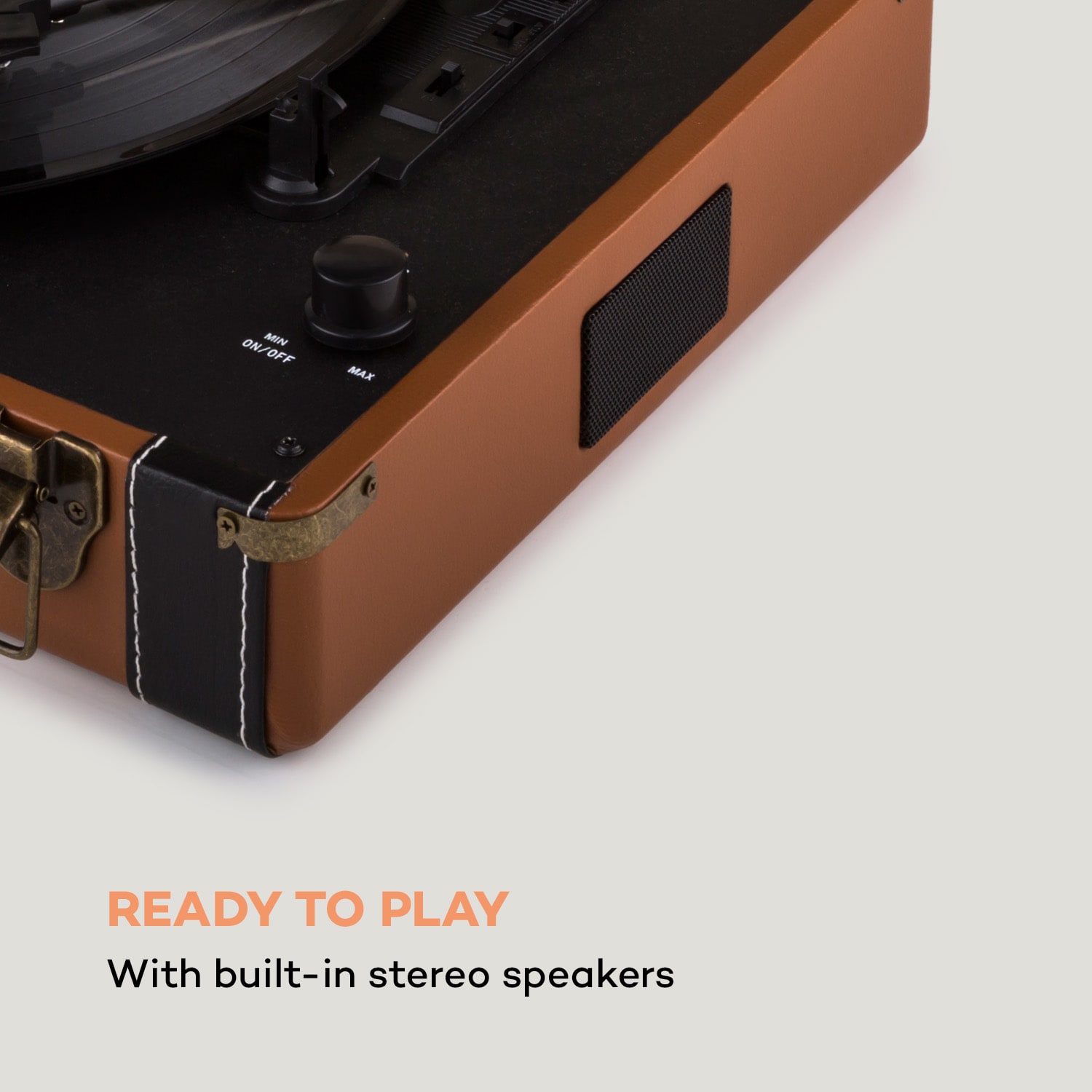
2 laterally integrated stereo speakers
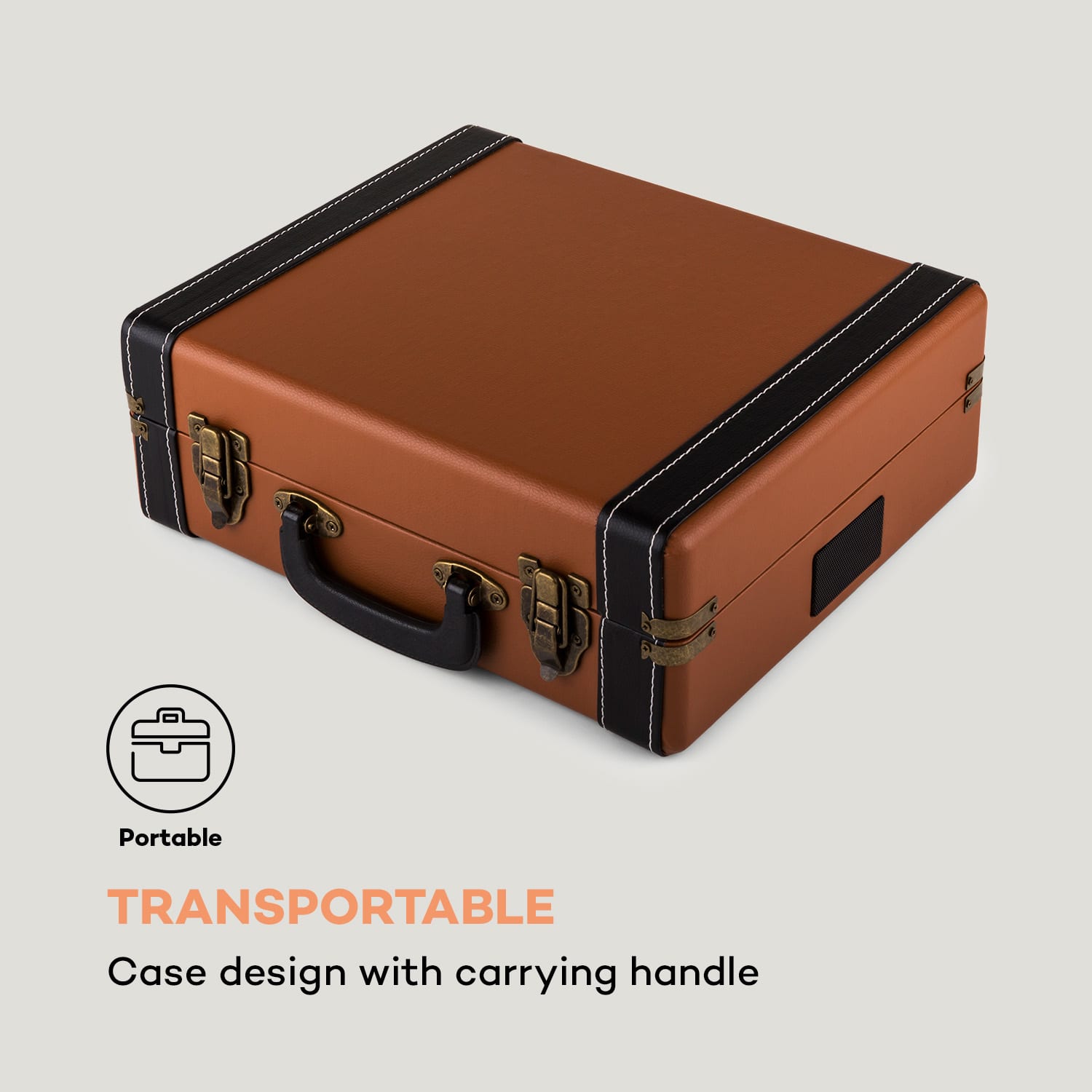
Carrying handle
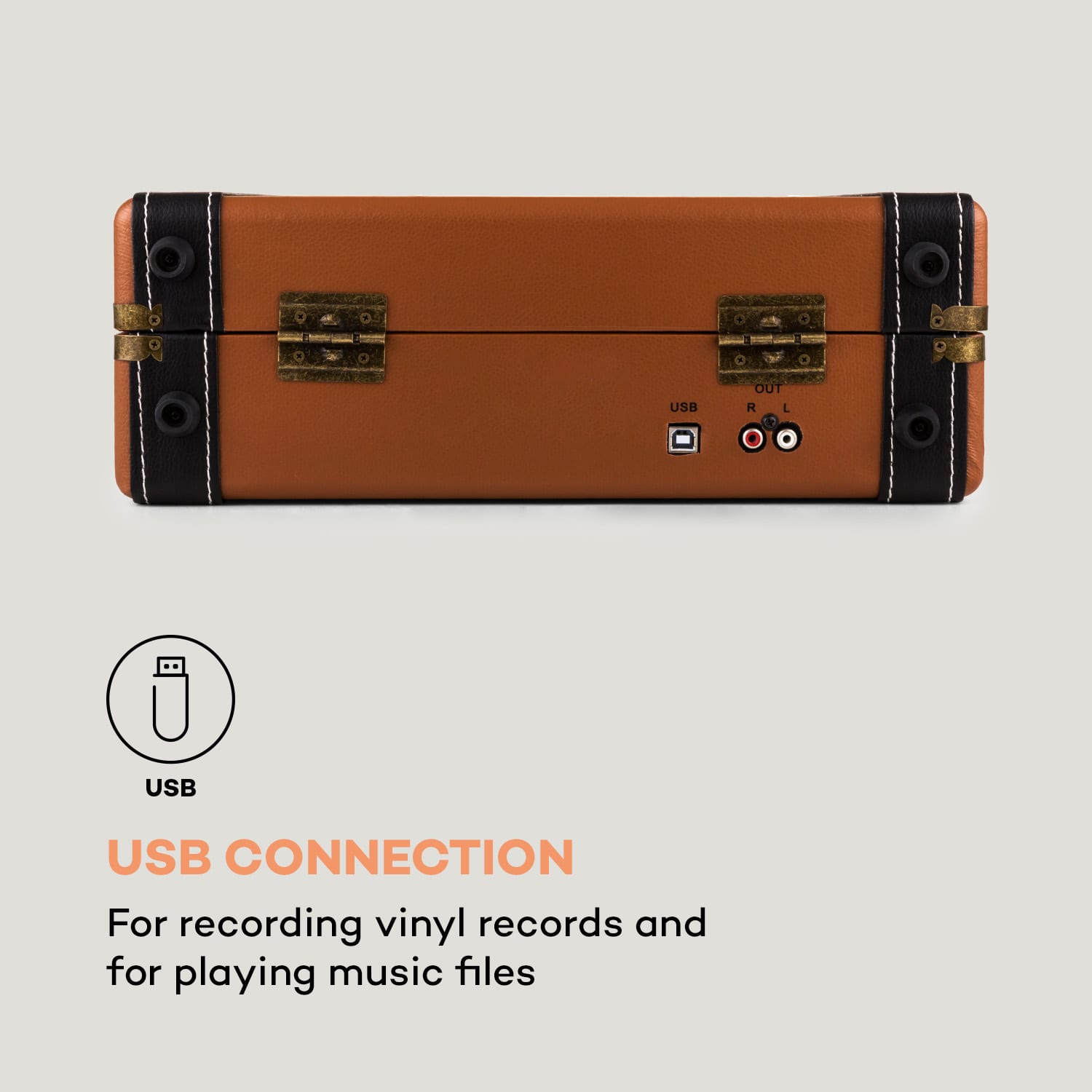
Digitisation of vinyl records via USB connection
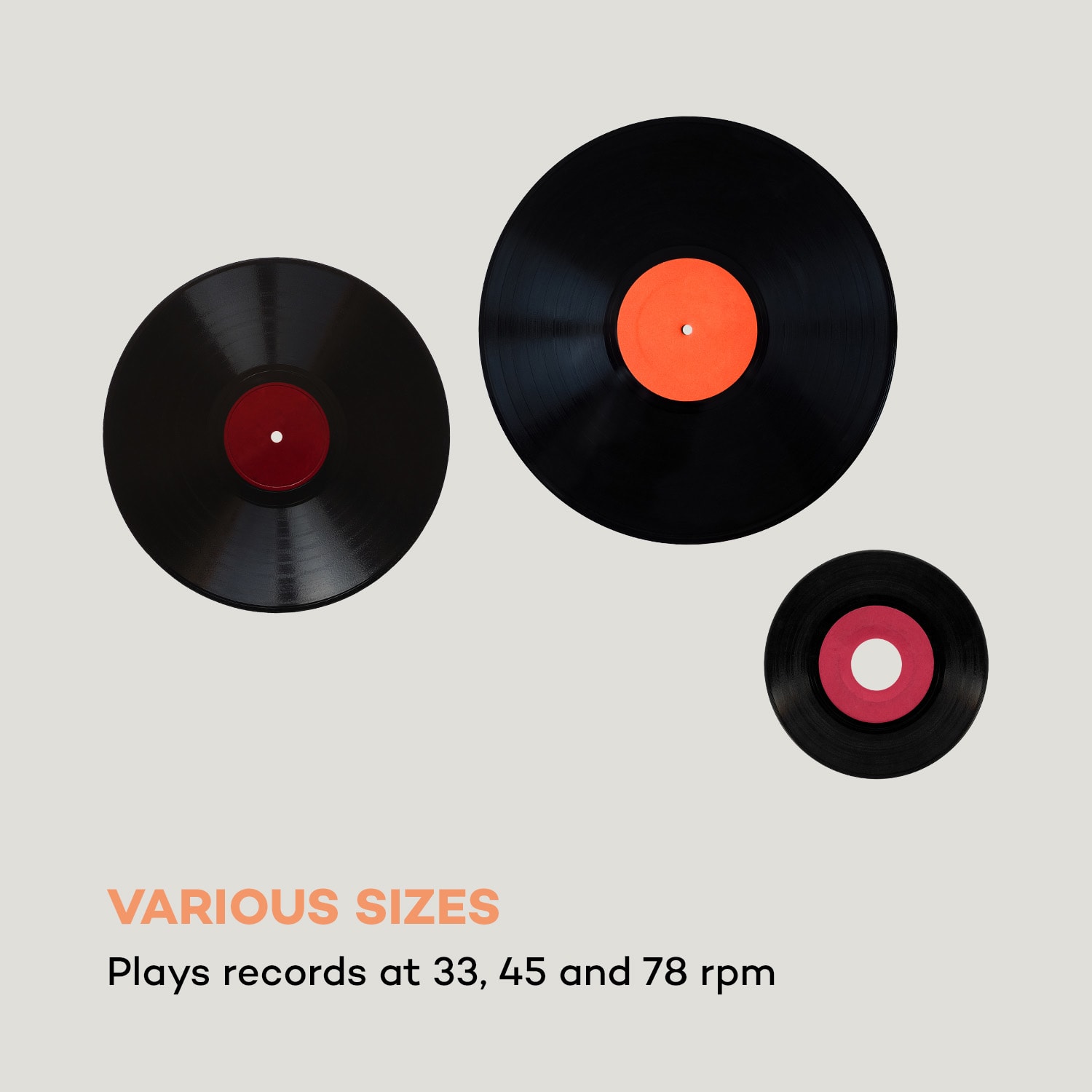
for 3 different record sizes
Product description
Do you feel like indulging in nostalgia from days gone by? Then get your old favourite records out of the cellar!
Because with the Jerry Lee from the brand auna, its clasps and metal decor in a "used look", you can not only play up to 3 different record sizes but also record the music from your personal favourite records in a compact digital format.
For this, it features a rear USB port, allowing the LP signal to be easily recorded on a computer. At the same time, the Jerry Lee turntable is powered via this connection. A suitable USB cable and an adapter for mains connection are included in the delivery.
The Jerry Lee turntable from auna does not require additional speakers, as two stereo speakers are already built into its stylish suitcase casing. Nevertheless, the rear RCA output offers the option to connect external speakers. The volume can be continuously adjusted directly on the device via a rotary control.
For convenient transport, the turntable can be easily folded shut and secured with two lever locks. Thanks to the rubber feet, it can be optimally positioned.
Features
- Connections: 1 x USB input, 1 x RCA output
- Supported playback speeds: 33, 45, 78 rpm
- "Used-look" locks and metal decoration
- Belt drive
- Lift lever
- Automatic start function
- Two front lever locks
- Power supply: AC 220-240V, 50-60Hz or DC 5V (power adapter included)
Dimensions and Technical Details
- approx. 35.5 x 11.5 x 27.5 cm (W x H x D)
- Weight: approx. 2.5 kg
What will be delivered?
- 1 x Device
- 1 x Mini LP Attachment
- 1 x USB Power Adapter
- 1 x USB Cable
- 1 x Recording Software (Audacity)
- German User Manual (additional languages: English)
Delivery & shipment